

Home Home

Mobile nav

Home
  • About
  • People
  • Research
  • Publications
  • Education
  • News & Events
Donate
Donate

Main navigation

  • About
    • Message From The Directors »
    • 35 Years of Impact »
    • Mission, Vision, & Values »
    • Our Sponsors »
  • People
    • Faculty »
    • Core Staff »
    • Post-Docs & Visiting Scholars »
    • Student Researchers »
    • Visiting Scholars »
    • University Affiliates »
    • External Advisory Board »
  • Research
    • MI Hydrogen »
    • Research Areas »
    • Methods & Tools »
    • Projects »
    • Labs »
    • Data Downloads »
  • Publications
    • Research Publications »
    • Factsheets »
    • Policy Briefs »
  • Education
    • Graduate Programs »
    • Fellowships »
    • Student Internships »
    • Resources »
    • Trivia »
  • News & Events
    • In The News »
    • Events »
    • Wege Lecture Series »
    • Newsletter Archive »

In this section

In this section
    • Faculty »
    • Core Staff »
    • Post-Docs & Visiting Scholars »
    • Student Researchers »
    • Visiting Scholars »
    • University Affiliates »
    • External Advisory Board »

Student Researchers

Sidebar menu

  • People

    • Faculty »
    • Core Staff »
    • Post-Docs & Visiting Scholars »
    • Student Researchers »
    • Visiting Scholars »
    • University Affiliates »
    • External Advisory Board »
Did You Know?

Water vapor is the most abundant GHG in the atmosphere. Its concentration depends on temperature and meteorological conditions and not directly on human activities.

read more view all factsheets
back to all student researchers

Richard F. Chandler

Image
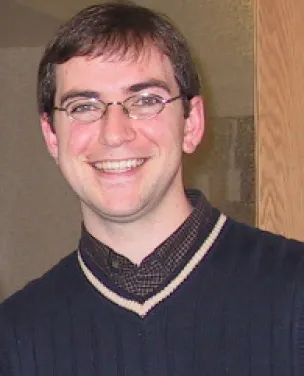
Research Assistant

Status:
Former
Education
  • M.S. Natural Resources, University of Michigan, 2004
  • M.B.A., University of Michigan, 2004
Links
LinkedIn
Publications (5)
Life Cycle Modeling of Concrete Bridge Design: Comparison of Engineered Cementitious Composite Link Slabs and Conventional steel Expansion Joints
Life Cycle Model for Evaluating the Sustainability of Concrete Infrastructure Systems
Life-Cycle Cost Model for Evaluating the Sustainability of Bridge Decks
An Integrated LCA-LCC Model for Evaluating Concrete Infrastructure Sustainability
LCC Model for Evaluating the Sustainability of Bridge Decks: A Comparison of Conventional Concrete Joints and Engineered Cementitious Composite Link Slabs [thesis]
Projects (1)
MUSES: Sustainable Concrete Infrastructure Materials and Systems: Developing an integrated life cycle design framework

Center for Sustainable Systems

3012 Dana Building
440 Church Street
Ann Arbor, MI 48109-1041
Phone: (734) 764-1412 [email protected]

xxxxxxxxxx

Newsletter Sign-Up
Staff Login

© 2026 Regents of the University of Michigan

Produced by Michigan Creative, a unit of the Office of the Vice President for Communications